
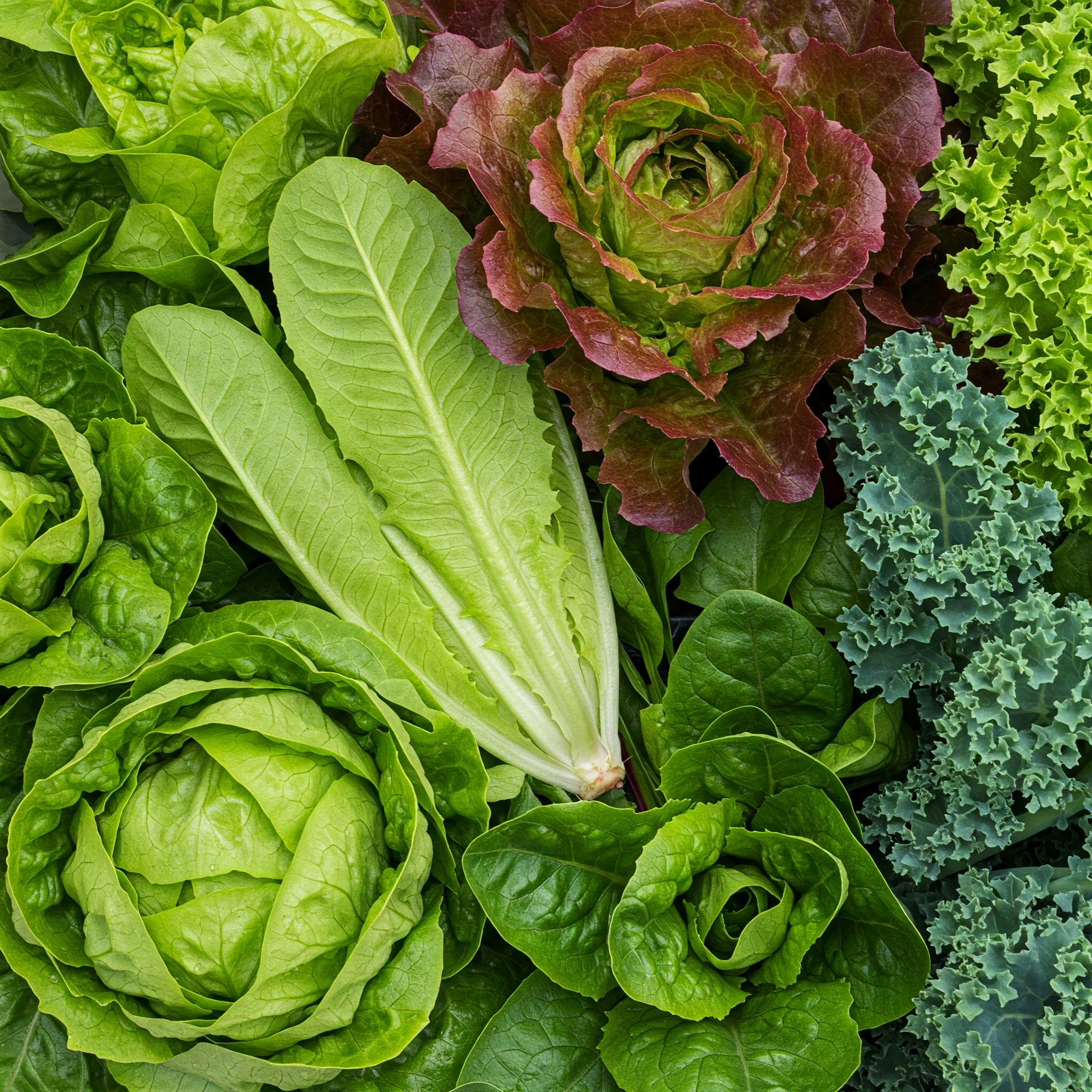
The unsung heroes of a nutritious diet are leafy greens. They offer an impressive range of textures and flavors, are low in calories, and are rich in vital vitamins and minerals. This book will introduce you to some of the most well-liked and adaptable lettuces and leafy greens, regardless of your level of culinary experience or desire to add more greens to your plate.
Red & Green Romaine
With strong, fibrous ribs running down the middle of each leaf, romaine lettuce grows in a tall, upright head. It has a crisp texture, particularly in the “heart” or core leaves.
- Green Romaine: The dark green leaves of the classic green cultivar have a small wavy or ruffled edge.
- Red Romaine: This striking cultivar begins with green leaves that turn a stunning deep red or bronze as it ages, especially on the outer leaves. Anthocyanins, potent antioxidants that give many fruits and vegetables their red, purple, and blue hues, are responsible for this red colouring.
Pro tip: Romaine tends to be cultivated in spring and autumn, although it is a cool-season crop that bolts (goes to seed) slowly in warm weather. Although it can withstand little shade, particularly in hotter areas, it prefers full light for optimal colour and flavour.


Health Benefits:
Rich in vitamins and minerals and low in calories, Romaine, both red and green, is a nutritional powerhouse.
- Vitamins and Minerals: Folate, calcium, potassium, and the vitamins C, K, and A (from beta-carotene) are all abundant in romaine.
- Antioxidant Power: The amount of antioxidants in a leaf increases with its colour. Anthocyanins, which have been demonstrated to have anti-inflammatory and other protective health advantages, are more abundant in red romaine than in other types.
- Hydration: Romaine lettuce has a high water content (more than 90%), making it a great method to remain hydrated.
- Digestive Health: Romaine’s fibre promotes a healthy digestive system by facilitating regularity and the absorption of nutrients.
Culinary Uses
Romaine is quite flexible in cooking because of its mild flavour and strong texture.
- The Classic Salad: The classic lettuce for Caesar salad is romaine. Its sturdy leaves don’t wilt when exposed to crunchy toppings and creamy condiments.
- Grilled Romaine: Romaine’s robust heads make a surprisingly tasty and sophisticated entrée when grilled. Just split the head in half, drizzle it with olive oil, then grill it for a few minutes, cut-side down, until it is just beginning to sear.
- Wraps and Boats: Romaine’s big, robust leaves are ideal low-carb containers for toppings like roasted veggies, taco meat, or chicken salad.
- Stir-fries and Soups: Romaine adds a delicate flavour and texture to stir-fries and soups in some cuisines by swiftly wilting it.
Fun Facts:
- Ancient Roots: One of the earliest known lettuces to be grown is romaine, which has been grown in ancient Egypt for more than 5,000 years.
- A Tale of Two Names: Since it was thought to have arrived in Western Europe through Rome, it is known in North America as “Romaine,” which is derived from the Italian “lattuga romana” (Roman lettuce). Because it was first found on the Greek island of Kos, it is known as “Cos” lettuce in Britain.
- The “Bitter Herb”: In the Passover Seder custom, romaine lettuce is occasionally used as a bitter herb to represent the bitterness of servitude.
Tips for Consumption:
- Selection: Seek out heads with a sturdy stalk and crisp, fresh leaves. Steer clear of those with brown edges or wilting leaves.
- Storage: To keep Romaine crisp for up to a week, keep it in the fridge in a plastic container coated with a moist paper towel.
- Preparation: Hold the head under cool, flowing water to wash. Use a salad spinner or wipe the leaves dry to eliminate extra moisture to avoid a sloppy salad.
- Use the Whole Head: Don’t throw away the healthy inner ribs! They can be cut and added to salads, tuna salad, or stir-fries for additional texture. They have a nice crunch.
Butter Lettuce
Butter lettuce has a delicate structure that gives it its distinctive soft texture: a small, loose head of broad, pliable leaves that are arranged like an open rose, with the outer leaves being light green and the inner leaves being a lovely pale yellow. The leaves are velvety and smooth, with the central rib being less noticeable than in other lettuces.
Pro tip: You can grow butter lettuce in the spring or autumn because it is a cool-weather crop. In hotter climes, it prefers partial shade to avoid wilting and bolting (going to seed) too soon.

Health Benefits:
Butter lettuce is a nutrient-dense food that is rich in vitamins and minerals, despite its delicate look.
- Rich in Vitamins: Vitamins A, C, and K are abundant in it; vitamin A is vital for the immune system and visual function, vitamin C is a potent antioxidant, and vitamin K is necessary for healthy bones and blood coagulation.
- Hydration: Butter lettuce has a water content of more than 95%, which makes it a good option for weight management because it helps you feel full and keeps you hydrated.
- Antioxidant Power: Antioxidants like carotenoids and flavonoids, which are found in butter lettuce, help shield the body from oxidative stress and lower the risk of developing chronic illnesses.
- Supports Digestion: Constipation is avoided, and a healthy digestive system is supported by its high fibre and water content.
Culinary Uses:
Butter lettuce is quite adaptable due to its mild flavour and tender texture, particularly in recipes where it takes centre stage.
- The Classic Salad: Butter lettuce is a fantastic base for a basic salad with a light vinaigrette, enabling its mild flavor to show. It mixes nicely with a range of toppings, from fresh fruits like strawberries to nuts and cheeses.
- Wraps and Boats: The big, soft leaves are perfect for making a gluten-free, low-carb wrap. They are frequently used in tacos, sandwiches, and wraps with veggies or chicken salad in place of tortillas or bread.
- Cooked Dishes: Butter lettuce is usually consumed raw, but it may be cooked just a little bit by sautéing or braising it for a few minutes, which changes the leaves into something like spinach—soft and a little sweeter.
- Garnish: Butter lettuce’s lovely, rose-like heads add visual appeal and a refreshing touch to a serving platter.
Fun Facts:
- The “Opium” Connection: The milky fluid present in the stems of some lettuce species, especially butter lettuce, is called lactucarium. It was formerly used as a moderate sedative and pain reliever, earning it the nickname “lettuce opium.”
- A Taste of History: Boston and Bibb lettuce are the two most popular varieties of butter lettuce. Boston lettuce has been grown for generations, but Bibb lettuce was created in Kentucky in the 1850s by a man named John Bibb.
- Easiest to Grow: One of the simplest and most dependable lettuce crops for gardeners to cultivate is butter lettuce. Because it regrows every two weeks, it can frequently be harvested leaf by leaf and is reasonably tolerant of lower temperatures.
Tips for Consumption:
- Handle with Care: Butter lettuce is highly perishable because of its delicate leaves. To prevent bruising, handle it carefully.
- Storage: To keep butter lettuce fresh and stop it from withering, store it in the refrigerator in a plastic bag or container covered with a moist paper towel.
- Wash Just Before Use: Wash the leaves right before eating them since moisture hastens the decomposition process. To avoid a sloppy salad, gently wipe them dry or use a salad spinner.
- Pairings: Dressings that aren’t too strong or acidic go well with butter lettuce’s delicate, sweet flavour. Fruit-based dressings, creamy dressings, and citrus vinaigrettes are all great options.
Cos Lettuce
With a pronounced centre rib running down each leaf, cos lettuce develops in a tall, upright head. The edges of the leaves, which are usually dark green, may be slightly ruffled or wavy. The notably crisp texture is particularly noticeable in the middle leaves, which are frequently marketed as “Romaine hearts.”
Pro tip: Compared to other lettuce varieties, cos lettuce is a cool-weather crop that bolts (goes to seed) more slowly in warmer climates. It’s preferable to plant it in the spring and autumn for the best flavour and texture. For a soft, non-bitter head, it needs full sun and regular watering.

Health Benefits:
Because it is high in vital vitamins and minerals and low in calories, cos lettuce is a nutritional powerhouse.
- Nutrient-Dense: It’s a great source of calcium, potassium, folate, and the vitamins C, K, and A (from beta-carotene). In general, the nutrient content of the darker green outer leaves is higher than that of the lighter inner ones.
- Antioxidant Power: Antioxidants, which are abundant in cos lettuce, help shield your body’s cells from harm brought on by free radicals. In addition to lowering the risk of chronic diseases, this can help reduce inflammation.
- Hydration: Consuming Cos lettuce, which has a high water content (over 90%), is a great method to meet your daily hydration requirements.
- Supports Digestive Health: Cos lettuce has fibre, which promotes regularity, healthy digestion, and gut health in general.
Culinary Uses:
Cos lettuce is quite adaptable in the kitchen because of its mild flavour and strong texture.
- The Classic Salad: The classic lettuce used in Caesar salad is cos lettuce. Its sturdy leaves don’t wilt when exposed to crunchy toppings and creamy condiments.
- Grilled Lettuce: Cos lettuce’s robust heads make a surprisingly tasty and sophisticated entrée when grilled. Just split the head in half, drizzle it with olive oil, then grill it for a few minutes, cut-side down, until it is just beginning to sear.
- Wraps and Boats: Cos lettuce’s big, robust leaves are ideal low-carb containers for contents like taco meat, chicken salad, or roasted veggies.
- Stir-fries and Soups: Cos lettuce adds a delicate flavour and texture to stir-fries and soups in certain cultures by swiftly wilting it.
Fun Facts
- Ancient Roots: The history of cos lettuce dates back more than 5,000 years to ancient Egypt, making it one of the earliest known cultivated lettuces.
- A Tale of Two Names: Since it was thought to have arrived in Western Europe through Rome, it is known in North America as “Romaine,” which is derived from the Italian “lattuga romana” (Roman lettuce). Because it was first found on the Greek island of Kos, it is known as “Cos” lettuce in Britain.
- The “Bitter Herb”: In the Passover Seder custom, cos lettuce is occasionally used as a bitter herb to represent the bitterness of servitude.
Tips for Consumption
- Selection: Seek out heads with a sturdy stalk and crisp, fresh leaves. Steer clear of those with brown edges or wilting leaves.
- Storage: To keep Cos lettuce crisp for up to a week, store it in the refrigerator in a plastic container coated with a moist paper towel.
- Preparation: Hold the head under cool, flowing water to wash. Use a salad spinner or wipe the leaves dry to eliminate extra moisture to avoid a sloppy salad.
- Use the Whole Head: Don’t throw away the healthy inner ribs! They may be diced and used in salads or stir-fries for additional texture, and they have a terrific crunch.
Red & Green Oak Leaf
Harvesting oak leaf lettuce is simple because it grows in a loose rosette rather than a tight head.
- Green Oak Leaf: The leaves of this cultivar are medium green and have a faint ruffled or wavy edge.
- Red Oak Leaf: The leaves of this striking variety begin green and mature to a rich, burgundy-red colour on the tips and edges. The more sunlight the plant receives, the deeper this colour becomes.
Both types are valued for their mild, slightly nutty, sweet flavour and delicate, fragile texture. Because you can harvest the outer leaves and the plant will continue to produce more, they are also referred to as “cut-and-come-again” plants.
Pro tip: You can produce oak leaf lettuce in the spring and autumn because it is a cool-weather crop. Even though it can withstand higher temperatures than many other lettuces, it still needs regular hydration and some shade in hotter climes to avoid bitterness and early bolting (going to seed).

Health Benefits:
A nutrient-dense, low-calorie leafy green that promotes general health and well-being is oak leaf lettuce.
- Vitamins and Minerals: It’s a great source of potassium, folate, and vitamins A, C, and K. While vitamin K is necessary for healthy bones and blood coagulation, vitamin A is vital for eyesight and a robust immune system.
- Antioxidant Power: Both varieties are rich in antioxidants, but the red oak leaf variety has a higher concentration of anthocyanins, the pigments that give it its red color. These compounds have powerful anti-inflammatory and protective effects on the body.
- Hydration: Because of its high water content, oak leaf lettuce can help you feel full and is an excellent way to remain hydrated.
- Digestive Health: Oak leaf lettuce’s fibre promotes a healthy digestive system by facilitating regularity and the absorption of nutrients.
Culinary Uses:
Oak leaf lettuce’s mild flavour and tender texture make it a flexible item that works well in a variety of recipes.
- The Salad Base: Its subtle flavour doesn’t overshadow other ingredients, making it the perfect foundation for any salad. Its lovely colour and form also provide a meal visual appeal.
- Delicate Pairings: Light, sophisticated dressings, such as a straightforward vinaigrette, go very well with oak leaf lettuce. It goes very well with cheeses, nuts, and fresh fruits.
- Wraps and Sandwiches: The tender leaves are a fantastic low-carb substitute for taco cups or sandwich wraps.
- Garnish: For plates of roasted meats or vegetables, the frilly leaves of oak leaf lettuce provide a lovely and appetising garnish.
Fun Facts:
- Named for a Tree: The leaves’ distinctive shape, which closely resembles the leaves of an oak tree, gives them the name “oak leaf.”
- Easy to Grow: One of the simplest types of lettuce to cultivate, oak leaf lettuce is popular among home gardeners and a fantastic option for novices.
- “Cut and Come Again”: It is well known that this lettuce can be picked more than once. The plant will continue to produce new leaves if you choose to harvest the outer leaves as needed, rather than chopping the entire head.
Tips for Consumption:
- Handle with Care: Oak leaf lettuce is prone to bruising because of its delicate texture. When cleaning and getting ready, handle it carefully.
- Wash Just Before Use: Wash the oak leaf lettuce leaves right before eating to keep them fresh. To get rid of extra moisture, gently wipe them dry or use a salad spinner.
- Storage: In a plastic bag or container covered with a moist paper towel, keep oak leaf lettuce refrigerated. Although it may remain fresh for a few days, for optimal flavour and texture, use it right away.
Green Coral
As a non-heading lettuce, green coral lettuce does not form a tight head but rather grows in an open clump. The leaves have a vivid, bright green colour and are frilly and deeply curled, like the head of an underwater coral. Unlike other lettuce kinds, the stems are soft and less noticeable. Its delicate leaves are crisp and supple, with a mild, somewhat sweet taste.
Pro tip: Green coral lettuce is a cool-weather crop that may be cultivated in spring and autumn, just like other loose-leaf lettuces. Because it is a “cut-and-come-again” type, you can harvest the outer leaves as needed, and the plant will keep producing more, extending the harvest season.

Health Benefits:
A nutrient-dense, low-calorie leafy green with many health advantages is green coral lettuce.
- Vitamins and Minerals: It is a great source of important vitamins, including A and C, which are important for healthy eyesight and a strong immune system. It also contains potassium, folate, and vitamin K, which is essential for bone health and blood coagulation.
- Antioxidant Power: Carotenoids are among the many antioxidants found in green coral lettuce that help shield the body’s cells from harm brought on by free radicals. In addition to lowering the risk of chronic diseases, this can help reduce inflammation.
- Hydration: Green coral lettuce has a water content of more than 95%, which makes it a wonderful option for weight management because it helps you feel full and keeps you hydrated.
- Digestive Health: This lettuce’s water and fibre levels promote a healthy digestive system and help ward off constipation.
Culinary Uses:
Green coral lettuce is a wonderful addition to many different cuisines because of its lovely colour and delicate texture.
- Salad Base: It is the perfect foundation for any salad because of its mild flavour and frilly leaves. It goes well with a broad range of toppings and condiments, from creamy salads to mild vinaigrettes.
- Sandwiches and Wraps: Without the bulk of a head lettuce, the tender leaves are ideal for layering in sandwiches and wraps to offer a crisp and fresh touch.
- Garnish: Green coral lettuce’s distinctive form and vivid hue make it a lovely and delectable addition to platters of roasted cheeses, meats, or vegetables.
- Taco and Burger Topping: Tacos, burgers, and sandwiches can all benefit from a few leaves of green coral lettuce, which gives them a delicious, crisp texture.
Fun Facts:
- Coral Connection: It is called “coral lettuce” because of the unusual way the leaves mimic the head of an undersea coral.
- Easy to Grow: One of the simplest lettuce types for a home gardener to cultivate is green coral lettuce. It is a particularly satisfying plant to nurture because of its quick growth and “cut-and-come-again” characteristics.
- Less Bitter: Green coral lettuce tends to retain its gentle and sweet flavour longer than certain other lettuces, which can turn bitter in warm weather.
Tips for Consumption:
- Handle with Care: Green coral lettuce is prone to bruising because of its fragile leaves. When cleaning and getting ready, handle it carefully.
- Wash Just Before Use: Wash the leaves right before you want to eat them to keep them crisp. To get rid of extra moisture, gently wipe them dry or use a salad spinner.
- Storage: Use a moist paper towel to keep green coral lettuce in a plastic bag or container in the refrigerator. Although it may remain fresh for a few days, for the greatest flavour and texture, use it right away.
- Pairings: Green coral lettuce has a light flavour; therefore, it goes well with mild dressings. Fruit-based dressings, creamy dressings, and simple vinaigrettes are all great options.
Rocket Lettuce
Green rocket is an annual herb that grows quickly. Its leaves are lobed and deep green, forming a loose rosette. They grow on thin stems and have smooth or slightly serrated leaves, depending on the cultivar. The flavour may intensify and the leaves may grow more deeply lobed as the plant ages. The plant will “bolt” (go to seed) in warmer climates and produce tiny, dark-veined, delicious white blooms.
Pro tip: You can grow rocket in the spring and fall because it is a cool-weather crop. Harvest the leaves when they are young and tender for maximum flavour. By providing regular water and some afternoon shade, bolting can be avoided.


Health Benefits:
Packed with vitamins, minerals, and health-promoting substances, rocket is a nutritional powerhouse.
- Rich in Vitamins: Vitamins K, A, and C are abundant in it. Vitamins A and C are potent antioxidants that boost the immune system, while vitamin K is essential for blood coagulation and bone health.
- Cancer-Fighting Properties: Since rocket is a cruciferous vegetable, it includes substances known as isothiocyanates. The possibility of these substances helping prevent specific cancers has been investigated.
- Bone Health: Calcium and vitamin K, which are vital for strong bones and the prevention of osteoporosis, are abundant in rocket.
- Hydration: Arugula’s high water content keeps you hydrated and may help you feel fuller for longer.
Culinary Uses:
Arugula is a versatile vegetable that works well in both raw and cooked recipes because of its strong, peppery flavour.
- Salads: In many salads, rocket is the main ingredient. Its peppery taste goes well with savoury proteins (grilled chicken, prosciutto), creamy cheeses (goat cheese, burrata), and sweet foods like fruit (pears, figs).
- Pasta and Pizza: When pizza comes out of the oven, a handful of fresh rocket is a common topping. It also tastes great when combined with Parmesan cheese, lemon, and olive oil in a pasta meal.
- Pesto: You may make a spicy, peppery pesto with rocket instead of or in addition to basil.
- Sandwiches and Wraps: Arugula leaves give sandwiches and wraps a delicious taste.
- Cooked Dishes: Arugula tastes best raw, but it can also be wilted into soups and stir-fries or lightly sautéed.
Fun Facts:
- An Ancient Aphrodisiac: Since ancient Roman times, when it was thought to be a potent aphrodisiac, rocket has been grown.
- Rocket in the Name: “Rocket” comes from the Italian word “ruchetta,” which is a diminutive of the Latin word “eruca.”
- The “Peppery” Flavor: Compounds known as glucosinolates, which are also present in other cruciferous vegetables like broccoli and cabbage, give rocket its distinctive peppery flavour.
Tips for Consumption:
- Fresh is Best: Arugula tastes its best when the leaves are soft, young, and fresh. The flavour may become extremely bitter as the plant ages or in hot climates.
- Wash and Dry: The green rocket should be well cleaned before usage, just like any other leafy green. To improve the adhesion of dressings, make sure the leaves are fully dry using paper towels or a salad spinner.
- Pairings: The robust flavour of rocket complements savoury, sweet, and rich foods. For a straightforward yet sophisticated salad, try it with roasted almonds, shaved Parmesan cheese, and lemon vinaigrette.
- Storage: To absorb excess moisture, place fresh arugula in a plastic bag in the refrigerator and cover with a paper towel. It’s better to use it right away, but it will last for a few days.
Mustard Lettuce
The leaves of mustard greens, an annual plant that grows in an open head or loose rosette, can be a variety of greens, with some having a reddish-purple tint; they can be smooth or ruffled and deeply serrated; they have a strong, spicy flavour that is more noticeable in the stems and older leaves; and as the plant ages, it produces clusters of small, yellow flowers on a central stalk.
Pro tip: You can grow mustard greens in the spring and fall because they are a cool-weather crop. When the leaves are young and sensitive, they are finest plucked because as the weather warms, their flavour gets stronger and more bitter. They favour full sun and steady moisture over partial shade.

Health Benefits:
An extremely nutrient-dense food, mustard greens are rich in vitamins, minerals, and powerful chemicals.
- Rich in Vitamins: The vitamins K, A, and C are abundant in them. Vitamins A and C are potent antioxidants that boost the immune system, while vitamin K is essential for blood coagulation and bone health.
- Antioxidant Power: Antioxidants like beta-carotene and flavonoids, which are abundant in mustard greens, help shield the body’s cells from harm brought on by free radicals. In addition to lowering the risk of chronic diseases, this can help reduce inflammation.
- Bone Health: Mustard greens are a fantastic diet for maintaining strong bones because of their high calcium and vitamin K content.
- Detoxifying Properties: Mustard greens, like other cruciferous vegetables, contain glucosinolates, which the body transforms into compounds that have been examined for their potential to help prevent specific types of cancer and may aid in detoxification.
Culinary Uses
Mustard greens are a versatile vegetable that can be used in both raw and cooked recipes because of their strong, spicy flavour. Their peppery sting is lessened and a richer, more savoury flavour is brought out when they are cooked.
- Raw: You may add a little spiciness to salads by using young, tender mustard green leaves. To counterbalance their intense flavour, they go nicely with creamy dressings and sweet components.
- Sautéed: This is among the most widely used methods for preparing mustard greens. To make a tasty and nutritious side dish, they can be sautéed with garlic, olive oil, and a little vinegar or lemon juice. The leaves become softer and less spicy due to the cooking process’s heat.
- Soups and Stews: Soups and stews benefit greatly from the addition of mustard greens. They can be cooked longer to fully tenderise and provide their flavour to the broth, or they can be added near the end of the cooking period for a fresh taste.
- Sandwiches and Wraps: To create a spicy contrast to other foods, a few leaves can be put in sandwiches and wraps.
Fun Facts:
- Mustard Seeds: Mustard seeds, which are used to make mustard paste, are produced by the same plant as mustard greens.
- Varieties: Mustard greens come in a wide range of types, such as enormous, red-frilled, and curled. Each tastes and feels a little different.
- A Global Staple: A common ingredient in various cuisines, including Southern American, Indian, Chinese, and African meals, is mustard greens.
Tips for Consumption:
- Fresh is Best: Use fresh mustard greens for the greatest flavour. Look for leaves that are crisp and vibrant and not withering.
- Wash Thoroughly: To get rid of any dirt or grit, mustard greens, like all other leafy greens, should be thoroughly cleaned.
- Pairings: Rich, fatty meals like bacon and gammon go nicely with the robust flavour of mustard greens. In order to counterbalance their spice, they also go nicely with sweet and tart flavours like vinegar, lemon, and honey.
- Storage: To absorb moisture, place mustard greens in a plastic bag in the refrigerator and cover with a paper towel. For the greatest quality, use them within a few days.
Wasabi Rocket
Wasabi rocket is an annual leafy green that grows quickly. Like classic rocket, it has lobed leaves that are bright green and have a slightly crinkly feel. Usually reaching a height of one foot, the plant bolts in warmer climates to produce tiny yellow blooms. Because of its quick growth, it is frequently ready for harvesting a few weeks after planting.


Health Benefits:
Wasabi rocket, like other members of the Brassica family, is nutrient-dense.
- Antioxidants: It contains substances like sulforaphane, which are potent antioxidants that aid in the body’s fight against free radicals.
- Vitamins: Rich in vitamins K, A, and C, which are vital for healthy bones, eyesight, and the immune system.
- Minerals: Offers minerals like iron and calcium.
- Anti-inflammatory Properties: Its spicy flavour is caused by isothiocyanates, which also have anti-inflammatory qualities.
Culinary Uses:
Wasabi rocket is a unique complement to many different cuisines because of its unique flavour.
- Salads: To add a peppery punch, combine it with other greens or use it as the foundation for a spicy salad.
- Sandwiches and Wraps: Any sandwich, wrap, or burger may be made more interesting with a few leaves.
- Pesto: For a spicy, flavourful variation, replace some or all of the basil in a pesto recipe with wasabi rocket.
- Garnish: It looks fantastic as a garnish for soups, fish, or meat meals because of its vivid colour and distinctive shape.
- Stir-fries: To keep it crunchy and spicy, add it right at the end of a stir-fry.
Fun Facts:
- Not a True Wasabi: Although it bears the same name, wasabi rocket is not the same plant as the true wasabi (Wasabia japonica), which is linked to horseradish and infamously hard to grow.
- Also Known As: This plant may sometimes be marketed as “Japanese mustard greens” or “wasabi rocket.”
- Flavor Profile: When the leaves are young and fresh, the spicy heat is at its strongest. The flavour may get softer as the plant ages.
- Bolt-Resistant: Wasabi rocket can withstand warmer temperatures longer than other greens, providing it a longer harvesting season even if it will eventually flower.
Tips for Consumption:
- Harvest Young: When the leaves are young and sensitive, they will have the strongest and tastiest flavour.
- Less is More. To obtain a taste for it, start with a small quantity. A little makes a big difference!
- Pairing: It goes nicely with sweet or creamy dishes like roasted sweet potatoes, avocado, or vinaigrette that can counterbalance its spiciness.
- Storage: For a few days, keep freshly picked leaves in the fridge in a loose bag. Blanch and freeze the leaves for extended storage.
Wild Rocket
Wild rocket is a sprawling perennial herb that can grow up to a foot tall in clusters. Its leaves are a vivid deep green with deeply lobed edges. It is renowned for its resilience and capacity to flourish in dry, poor soil, in contrast to the annual salad rocket. It yields tiny, vivid yellow blossoms with a subtle peppery taste that are also delicious. It is a dependable source of greens all through the growing season since the leaves keep their flavour until it bolts (blooms).


Health Benefits:
Wild rocket is a nutritional powerhouse, just like other leafy greens.
- Antioxidants: Packed with antioxidants such as quercetin, carotenoids, and vitamin C, it helps shield your body from inflammation and cellular damage.
- Vitamins and Minerals: Rich in important minerals, including calcium and iron, as well as vitamins A, C, and K.
- Anti-inflammatory Properties: Wild rocket’s strong flavour is derived from isothiocyanates, which also have potent anti-inflammatory and anti-cancer effects.
- Digestive Health: It has a high fibre content, which supports a healthy digestive system.
Culinary Uses:
Wild rocket is a versatile ingredient that can withstand rich and creamy flavours because to its strong, peppery flavour.
- Salads: Add it to milder greens for a flavour boost or use it alone for a spicy salad. It goes especially well with creamy or sweet foods like feta, goat cheese, peaches, or strawberries.
- Sandwiches and Wraps: A few leaves can add a spicy twist to a basic sandwich or wrap.
- Pesto: A great, spicy substitute for basil in pesto is wild rocket.
- Pasta & Pizza: To preserve the flavour and texture of fresh rocket leaves, add them to a pasta dish or pizza right after cooking.
- Cooked Greens: Wild rocket is most commonly used as a salad green, but it can also be used in soups and stir-fries or simply sautéed.
Fun Facts:
- Ancient History: Since the Roman era, rocket has been a common culinary herb. It was even thought to be a potent aphrodisiac!
- Not a True Rocket: Although Diplotaxis tenuifolia belongs to the mustard family, it is not the same species as the more widely used salad rocket (Eruca sativa), despite having comparable flavours and applications.
- Self-Seeding: The plant will probably self-sow if you let it flower and go to seed, giving you a steady supply of fresh greens.
Tips for Consumption:
- Start Small: Wild rocket has a strong flavour, so it’s better to start with a tiny amount and add more as you want.
- Harvest Young: The young leaves are usually the most tender and less peppery, but the flavour persists after blossoming.
- Wash Carefully: Handle the leaves carefully and pat dry after washing because they are prone to bruising.
- Pairing is Key: The greatest way to offset the flavour of wild rocket is with complementary flavours. Think about serving it with sweet fruits, aged cheeses, or a straightforward vinaigrette.
Concluding remarks
Leafy greens are incredibly adaptable and high in nutrients. There is a green for every taste and purpose, regardless of your preference for crisp, tender, spicy, or mild. One leaf at a time, add diversity to your meals and improve your health!


youtube downloader for pc
excellent put up, very informative. I’m wondering why the opposite experts
of this sector do not notice this. You should continue your writing.
I’m sure, you’ve a huge readers’ base already!
여성전용마사지
피곤함을 내려놓고 싶은 순간, 토닥이가 따뜻하게 맞이합니다.
지금 이용해보세요.
토닥이
여성전용마사지는
몸과 마음 모두를 초기화해주는 최고의 힐링이었어요.
서울여성전용마사지
오랜만에 나를 위한 시간을 보냈어요.
여성전용마사지
덕분이에요.
토닥이
I walked in stressed, walked out transformed — thank you 토닥이.
강남여성전용마사지
딱딱한 몸과 지친 마음을 함께 풀어주는 강남토닥이 여성전용마사지는 저에게 꼭 필요한 시간이었어요.
서울여성전용마사지
다시 방문하고 싶은 곳, 누군가에게 꼭 추천하고 싶은 곳이 있다면 저는 주저
없이 여성전용마사지를 말할
거예요.
부산여자마사지
I walked into 부산여성전용마사지 feeling drained,
and left feeling whole again.
수원여자마사지
고요한 공간 속에서 수원여성전용마사지의 따뜻한 손길을 통해 진짜 힐링이 뭔지 느꼈어요.
인천토닥이
It’s always the first place I think of when I’m tired.
인천여성전용마사지.
강남마사지
Taking time for myself at 강남여성전용마사지 reminded me
that I’m worth slowing down for.
인천여성전용마사지
My nervous system felt completely soothed by the calm touch at 인천여성전용마사지.
강남호스트바
기분 전환이 필요할 땐 강남호빠만 한 데가 없어요.
부산여성전용마사지
There’s something magical about 부산여성전용마사지—it stays with you.
casino-online-428
Хочеш зазнати успіху? онлайн ігри казино: свіжі огляди, рейтинг майданчиків, вітальні бонуси та фрізпіни, особливості слотів та лайв-ігор. Докладно розбираємо правила та нагадуємо, що грати варто лише на вільні кошти.
bonus-casino-363
Цікавлять бонуси? казіно з бонусами: актуальні акції, подарунки за реєстрацію, депозитні та VIP-бонуси. Чесно розбираємо правила, допомагаємо зрозуміти вигоду та уникнути типових помилок під час гри.
321chat-140
321 chat rooms free video chat
bonus-casino-436
бонуси в казино бонуси казино