
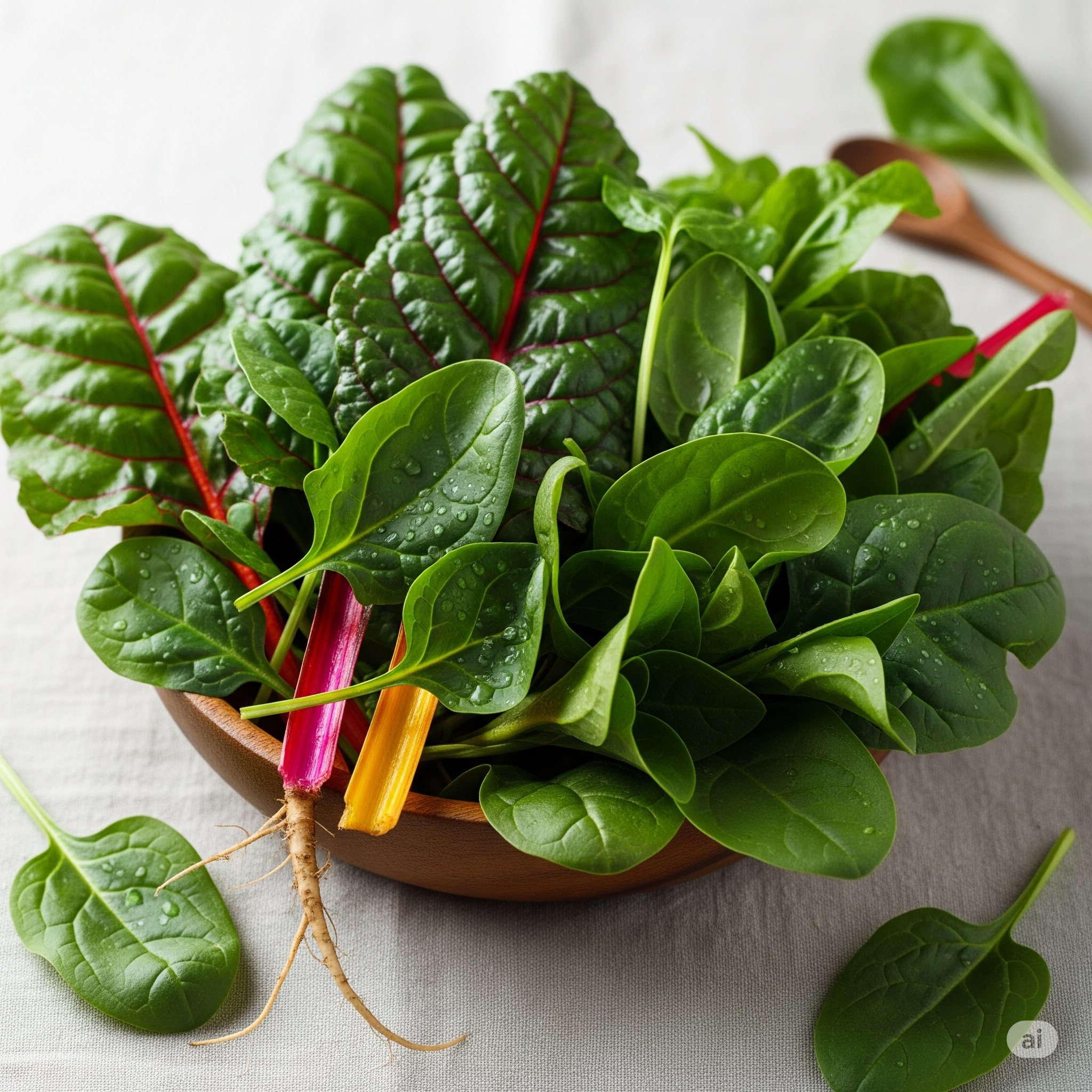
A variety of tasty and nutritious leafy greens is waiting for you, but all the attention is focused on Romaine and Rocket. These greens—from the colourful stalks of chard to the tender leaves of baby spinach and the heat-loving New Zealand spinach—offer distinctive textures and health advantages that make them indispensable in the kitchen. Let’s examine these adaptable veggies in more detail.
Chard
A biennial plant, chard is a kind of beetroot that doesn’t provide tasty roots. Because of how many edible leaves and stems it produces, it is grown as an annual. With a noticeable midrib in the middle, the plant produces a rosette of big, luxuriant leaves. Chard’s renowned ornamental appeal is derived from its stems and veins, which can range in colour from white to yellow, orange, pink, and vivid red. Well-known types such as ‘Bright Lights’ provide an eye-catching kaleidoscope of colours.


Health Benefits:
Rich in vitamins and minerals and low in calories, chard is a nutritional powerhouse.
- Rich in Vitamins: Vitamins K, A, and C, which are essential for healthy bones, eyesight, and the immune system, are abundant in it. More than 300% of the daily need for vitamin K can be obtained from one cup of cooked chard.
- Antioxidant Properties: Beta-carotene and flavonoids, two potent antioxidants found in chard, help stave off chronic illnesses.
- Supports Heart Health: Chard’s high potassium, magnesium, and nitrate levels can enhance cardiovascular health by lowering blood pressure.
- Aids Digestion: Its high fibre content helps control blood sugar levels and supports a healthy digestive system.
Culinary Uses:
Chard has two different textures and flavours in a single vegetable, and both its leaves and stems can be eaten.
- Leaves: Like spinach, the leaves have a mild, earthy, and somewhat bitter flavour. They can be eaten uncooked in salads when they’re young. Cooking is preferable for larger, more mature leaves. They are great sautéed with garlic and olive oil, added to pasta dishes, soups, stews, and frittatas, or used as a wrap for fillings, but they wilt rapidly.
- Stems: The crisp stems taste quite similar to beets. They should be prepared separately and require longer to cook than the leaves. As with other vegetables, you can roast, braise, or sauté them. They can be cooked till soft and served as a side dish, or they make a great addition to stir-fries.
Fun Facts:
- Not Actually Swiss: Although the plant is commonly referred to as “Swiss chard,” it is not indigenous to Switzerland. The Mediterranean region is where it first appeared. It is believed that a Swiss botanist who characterised it is the source of the “Swiss” name.
- A Rainbow of Colours: Phytonutrients known as betalains are responsible for the stunning, vivid hues of chard. The colour of beets is caused by these same chemicals.
- Ancient History: For generations, people have been growing chard. According to historical accounts, it was a common dish in ancient Greece and Rome.
Tips for Consumption:
- Separate the Stems and Leaves: Because the stems and leaves need different cooking periods, it is recommended to separate them for the majority of cooked foods. After cooking the stems for a few minutes, add the leaves.
- Wash Thoroughly: Because the stems and leaves need different cooking periods, it is recommended to separate them for the majority of cooked foods. After cooking the stems for a few minutes, add the leaves.
- Blanching Reduces Bitterness: A short blanch in boiling water will help to soften the bitterness of raw chard if you find it too strong.
- Pairing: Chard complements many other flavours. It goes well with matured cheeses like Parmesan, garlic, onions, and lemons. Its earthy bitterness is also well-balanced by adding it to recipes that have a creamy component.
Baby Spinach
Simply said, baby spinach (Spinacia oleracea) is an immature, youthful form of the common spinach plant. Its bright green leaves are tiny and fashioned like spades. The leaves are smooth, almost velvety, and the stems are exceedingly sensitive and thin. As the plant develops rapidly, the “baby” leaves are usually picked when they are just a few inches long, before the texture gets tougher and the flavour more intense.


Health Benefits:
Despite its diminutive size, baby spinach is packed with nutrients.
- Vitamins Galore: Vitamins K, A, and C are abundant in it. While vitamins A and C are potent antioxidants that promote healthy skin, eyesight, and a robust immune system, vitamin K is essential for blood coagulation and bone health.
- Mineral-Rich: Iron, magnesium, and potassium are among the necessary minerals found in baby spinach that are critical for blood pressure regulation, muscle function, and energy levels.
- Antioxidant Power: Rich in antioxidants such as lutein and zeaxanthin, which are proven to promote eye health and guard against cataracts and age-related macular degeneration.
- Good for Digestion: Its high fibre content facilitates digestion and supports intestinal health.
Culinary Uses:
Baby spinach is a culinary chameleon due to its delicate leaves and mild, slightly sweet flavor.
- Salads: Baby spinach really shines in this situation. Its tender leaves make the ideal foundation for a straightforward salad. They go nicely with everything from creamy cheeses and a basic vinaigrette to fruit and nuts.
- Smoothies: Because of its mild flavour, a large handful can be added to a smoothie without dominating the fruit’s flavour. It’s a simple method to increase your nutrient intake.
- Sautéed and Wilted: Baby spinach is a quick and simple side dish because it wilts in only a few minutes. For a tasty and nutritious side dish to any meal, sauté it with a little garlic and olive oil.
- Pastas and Soups:At the very end of cooking, add a handful of baby spinach to soups, stews, or pasta sauces. With little further effort, it will wilt and provide a nutritional and colour boost.
- Sandwiches and Wraps: Add it to burgers, wraps, and sandwiches as a tasty and healthy substitute for lettuce.
Fun Facts:
- Popeye Power: In the 1930s, the well-known animated figure Popeye is said to have increased spinach intake in the US by more than 30%. A scientific inaccuracy that incorrectly claimed spinach had an exceptionally high iron content sparked his passion for the green food.
- Florentine Dishes: The word “Florentine,” which refers to food served on a bed of spinach, is thought to honour Catherine de’ Medici, a Florence native who introduced her passion for spinach to France.
- Ancient Roots: Cultivated for more than 2,000 years, spinach is indigenous to Persia (present-day Iran).
Tips for Consumption:
- Wash Thoroughly: Grit can occasionally be found in even pre-washed newborn spinach. Before using, quickly rinse it in a bowl of water or a colander to make sure it’s clean.
- Mix It Up: Try mixing baby spinach with other greens or foods that have stronger flavours if you don’t like the mild taste.
- Pair with Vitamin C: Combine spinach with foods high in vitamin C, such as bell peppers, strawberries, or a squeeze of lemon juice, to optimise the absorption of iron from spinach.
- Cooking vs. Raw:Although spinach is beneficial both fresh and cooked, cooking breaks down oxalic acid, which can prevent the absorption of some minerals, such as calcium and iron. Cooking, however, might also somewhat lower the vitamin C level. For a balanced nutritional intake, it is better to eat spinach both fresh and cooked.
New Zealand Spinach
Often grown as an annual, New Zealand spinach is a low-growing, sprawling perennial herb. It has deep green, succulent, triangular leaves that are almost velvety in texture. The plant tends to trail, producing a dense foliage mat that can extend for many feet. In the leaf axils, it bears tiny, inconspicuous yellow blooms. The plant’s distinctive, horn-like seed pods are what give it its formal name, Tetragonia, which translates to “four angles.”


Health Benefits:
New Zealand spinach is a healthy vegetable, even if it isn’t a true spinach.
- Rich in Vitamins: It’s a great source of vitamin K, which is necessary for healthy bones and blood coagulation. Vitamins A and C are also present in good concentrations.
- Antioxidants: It has a lot of antioxidants, like many other leafy greens, which help fight off free radicals and lower inflammation.
- Hydrating: Because of their high water content, the thick, meaty leaves are a hydrating complement to your diet.
- Supports Digestive Health: It has a high dietary fibre content, which supports a healthy digestive system.
Culinary Uses:
When cooked, New Zealand spinach has a soft texture and a mild, somewhat salty flavour. Like normal spinach, it can be utilised in a variety of ways.
- Cooked Dishes: It tastes finest cooked. You may add the leaves and delicate tips to stir-fries, soups, stews, or frittatas, or you can sauté them lightly with olive oil and garlic.
- Blanching is Key: It is strongly advised to blanch the leaves in boiling water for approximately one minute before cooking because New Zealand spinach contains oxalates. This procedure aids in lowering the oxalate level, which can obstruct the absorption of some minerals in excess.
- Salads: Young, fragile leaves can be eaten raw in salads in moderation, while mature leaves are better cooked.
- Spinach Substitute: In any recipe, it’s a great alternative to spinach, especially in the summer when conventional spinach has stopped yielding.
Tips for Consumption:
- A Captain Cook Discovery: During their 18th-century expedition, botanist Joseph Banks and Captain James Cook recorded New Zealand spinach. Because of its high vitamin C concentration, they utilised it to keep the crew from getting scurvy.
- Not a True Spinach: Unlike real spinach, which is a member of the amaranth family (Amaranthaceae), it is a member of the fig-marigold family (Aizoaceae).
- A Global Traveler: Originally from Australia, New Zealand, and portions of Asia, it spread throughout the world thanks to mariners.
Tips for Consumption:
- Blanch First: New Zealand spinach should always be blanched before cooked in order to lower oxalates. Before using the leaves in your recipe, just submerge them in boiling water for a minute and then quickly move them to an ice bath.
- Harvest Tender Tips: Harvest the young leaves and the tips of the shoots for maximum flavour and texture. The plant is also encouraged to generate additional foliage by this “cut-and-come-again” strategy.
- Pairing: Its somewhat salty taste complements other vegetables in stir-fries as well as citrus and creamy sauces.
Remarks
These three nutrient-dense, adaptable greens—Chard, Baby Spinach, and New Zealand Spinach—are ideal for varying your diet. They provide taste, color, and health benefits to any meal, whether you eat them raw, sautéed, or in substantial recipes.


