
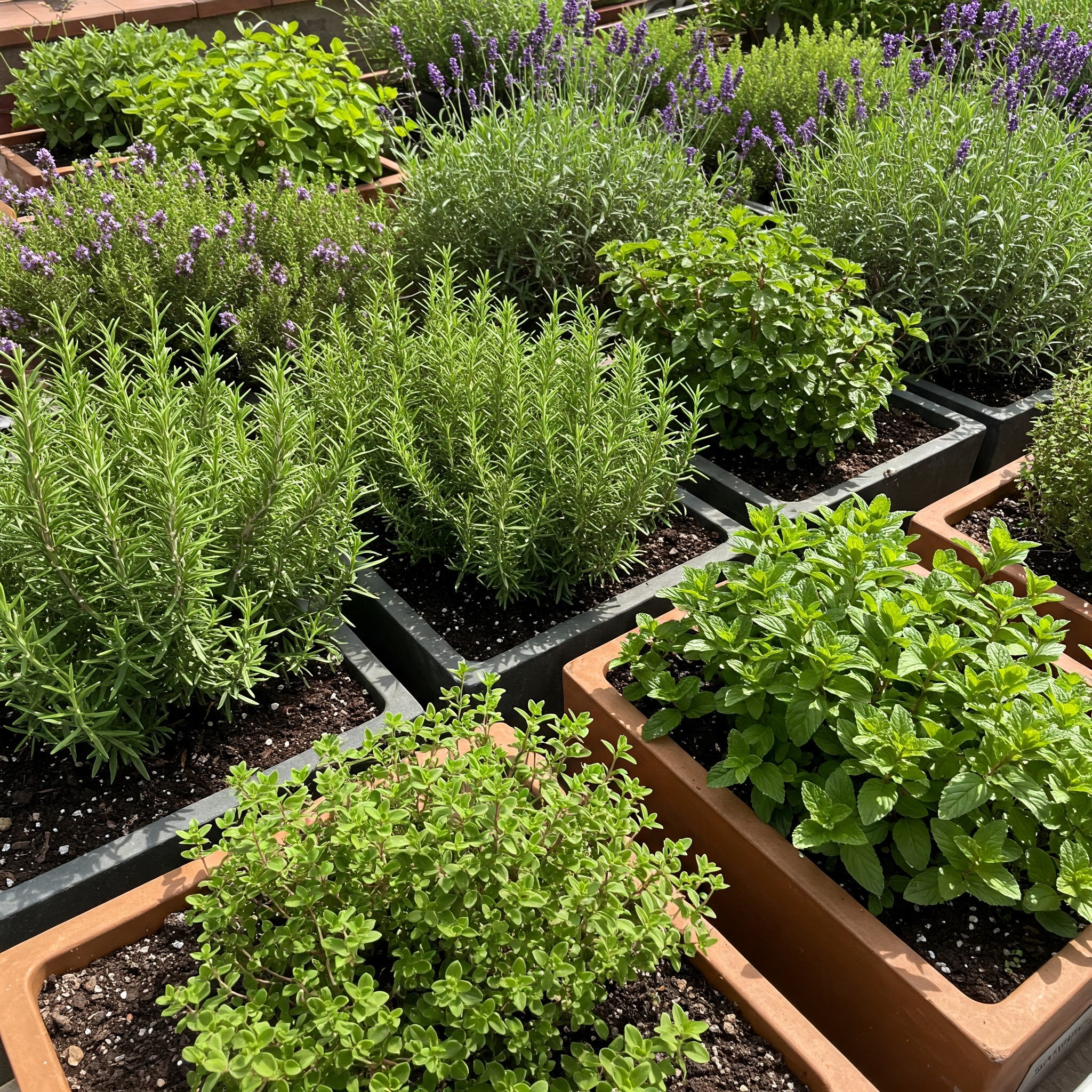
Herbs are one of the potent treatments that nature has given us. In addition to improving the taste of our food, several of them provide remarkable health advantages. Let’s explore the culinary uses of some of the most well-known herbs, as well as some interesting trivia you might not be aware of.
Rosemary
Depending on the cultivar, rosemary is a hardy perennial shrub that can reach a height of 1 to 5 feet. Its leaves have a silvery-white, fluffy underside and a thin, needle-like, dark green top. One important identification is this two-toned look. The base of the stems is woody, while the tips are greener. A favourite of pollinators like bees, rosemary yields tiny, delicate blooms in late winter or early spring that are usually blue, purple, or white.
Pro tip: Rosemary grows best in full light and well-drained soil and can withstand drought. Whether grown in a container or the ground, it’s a great option for a low-maintenance garden.

Health Benefits:
Rosemary is rich in chemicals that have substantial health advantages and has been used in traditional medicine for a long time.
- Antioxidant and Anti-inflammatory: Antioxidants and anti-inflammatory substances such as carnosic acid and rosmarinic acid are abundant in rosemary. These substances can lessen inflammation in the body, which is connected to a number of chronic illnesses, and aid in the neutralisation of dangerous free radicals.
- Boosts Memory and Focus: Rosemary has been linked to memory for thousands of years. It has been demonstrated that the scent of rosemary essential oil enhances memory, focus, and cognitive function, making it an excellent study tool.
- Improves Digestion: The chemicals in rosemary can help reduce bloating, relieve gas, and calm an upset stomach. A traditional cure for intestinal problems is a cup of tea made with rosemary.
- Hair and Scalp Health: One common natural cure for hair care is rosemary. Its essential oil can aid with dandruff and an oily scalp and is frequently used to promote hair growth by increasing circulation to the scalp.
Culinary Uses:
A mainstay of Mediterranean cooking, rosemary’s strong, piney, and faintly lemony flavour goes well with a wide range of dishes.
- Roasted Meats and Vegetables: Rosemary is a traditional addition to roasted potatoes, lamb, hog, and poultry. Its robust leaves withstand lengthy cooking times, and a few sprigs can add flavour to an entire dish.
- Breads and Baked Goods: A tasty and fragrant loaf is produced when freshly chopped rosemary is added to bread dough, particularly focaccia.
- Marinades and Sauces: Rosemary gives tomato sauces, stews, and marinades a savoury depth. An entire sprig can be added to a simmering stew and then taken out before serving.
- Infusions: Oils and vinegars can be infused with rosemary to produce tasty condiments. It also produces a wonderful, fragrant herbal tea.
Fun Facts:
- “Dew of the Sea”: The word “rosemary” refers to its native habitat along the Mediterranean coast and is derived from the Latin words ros (dew) and marinus (of the sea).
- Symbol of Remembrance: Garlands made of rosemary were worn by pupils in ancient Greece to aid in memory retention. This custom has persisted, and rosemary is still used as a token of remembrance during festivities and funerals.
- Pest Repellent: The pungent aroma of rosemary serves as an organic bug deterrent. It can help keep pests like mosquitoes away from your plants.
Tips for Consumption:
- Fresh vs. Dried: The flavour of fresh rosemary is brighter and stronger than that of dried rosemary. The flavour is more concentrated when using dried rosemary, so use a bit less than the recipe specifies.
- Strip the Leaves: It’s frequently necessary to separate the leaves from the woody stem when cooking with rosemary sprigs. Holding the top of the sprig, you may easily remove the leaves by running your fingers down the stem.
- Pairing: Rosemary goes very well with lemon, garlic, and other Mediterranean herbs like oregano and thyme. Don’t be scared to use it in substantial meals because its strong flavour can withstand rich foods.
Thyme
Thyme is a woody perennial subshrub that grows slowly. It has small, oval-shaped, grayish-green leaves that grow in pairs on thin, rigid stems. The plant can reach a height of 6 to 12 inches and creates a dense mat or mound. Bees love the clusters of tiny, delicate, purplish-pink or white blooms it produces in late spring or early summer. It is an excellent option for container gardening, ground cover, and rock gardens due to its compact growing habit.
Pro tip: Thyme prefers sunlight and grows best on soil that drains properly. It dislikes “wet feet,” so don’t overwater it. Once established, it can withstand a lot of drought.

Health Benefits:
Thyme is rich in vitamins, minerals, and other healthy substances and has been utilised for ages in traditional medicine.
- Antioxidant and Antimicrobial: Thyme’s abundance of antioxidants helps shield cells from harm. Additionally, it contains thymol, a strong antibacterial substance that is a main component of several hand sanitisers and mouthwashes.
- Cough and Sore Throat Relief: A traditional cure for coughing and sore throats is thyme tea or a thyme-based gargle. As a natural expectorant, the herb can help relieve congestion.
- Supports Digestive Health: Because of its carminative qualities, thyme can help calm indigestion, lessen gas, and soothe an upset stomach.
- Supports Heart Health: By lowering inflammation and promoting healthy circulation, thyme’s anti-inflammatory and antioxidant properties can help shield the heart.
Culinary Uses:
Because of its strong, savoury flavour, thyme goes well with a variety of dishes. It withstands lengthy cooking times effectively, enabling its flavour to gradually permeate a meal.
- Roasting: A traditional herb for roasted lamb, hog, and poultry is thyme. Roasted veggies like potatoes, carrots, and mushrooms go really well with it as well. Before roasting, just sprinkle a few sprigs with your seasonings.
- Soups, Stews, and Sauces: A few sprigs of thyme will lend a tremendous depth of flavour to a tomato-based sauce, stew, or simmering soup. Before serving, don’t forget to cut off the woody stems.
- Seasoning: A common ingredient in many spice mixtures and rubs, such as herbs of Provence, is thyme. It tastes great just sprinkled on top of cooked fish or meat.
- Infusions: Steep fresh thyme sprigs in boiling water to produce a simple and calming herbal tea.
Fun Facts:
- Ancient Symbolism: Thyme was considered to have an energising aroma and was a sign of bravery in ancient Greece. To prepare for combat, warriors would bathe in thyme.
- Honey Bee Favorite: Bees are particularly drawn to thyme flowers, and thyme honey, with its unique and strong taste, is a highly valued treat throughout the Mediterranean region.
- Latin Origin: The Greek word thymos, which means “to fumigate” or “to smoke,” is where the name Thymus originates. Thyme was frequently used as incense to fend off evil spirits and purify areas.
Tips for Consumption:
- Fresh vs. Dried: Fresh thyme offers a more lively, aromatic quality, while dried thyme keeps its flavour well. When replacing fresh thyme, use roughly half as much dried thyme.
- To Remove Leaves: A fresh thyme sprig’s leaves can be readily removed by running your fingers down the stem while holding the top of the sprig in one hand. The leaves will come off as you go.
- Pairing: Other herbs like marjoram, oregano, and rosemary go very well with thyme. It also tastes great with lemon, garlic, and mushrooms. A key component of many traditional comfort foods is their flavour.
Oregano
A perennial herb, oregano usually grows to a height of one to two feet in a bushy, low-growing mound. It grows on woody stalks and has small, round, grayish-green leaves. A powerful, fragrant perfume is released when the leaves are crushed. Bees and butterflies love the little clusters of purplish-pink or white flowers that oregano plants produce throughout the summer on spiky terminals.
Pro tip: Full sun and sandy, well-drained soil are ideal for oregano growth. It does not thrive in extremely moist environments and is highly drought-tolerant. It may be kept under control and kept from growing weedy in your garden by planting it in a container.

Health Benefits:
Carvacrol and thymol, two of the many health-promoting compounds found in oregano, are the main contributors to its potent flavour.
- Powerful Antioxidant: Because of its extraordinary antioxidant content, oregano helps shield the body’s cells from harm brought on by free radicals. It has even more antioxidants than a lot of other fruits and vegetables.
- Antimicrobial and Antibacterial: Strong antibacterial qualities are well-known for the chemicals thymol and carvacrol. To combat bacterial and fungal diseases, oregano oil is frequently used in natural medicines.
- Supports Digestive Health: An upset stomach, gas, and indigestion can all be eased with an oregano tea.
- Anti-inflammatory Properties: Numerous chronic diseases are associated with inflammation, which can be decreased by the antioxidants and other chemicals found in oregano.
Culinary Uses:
Because of its strong, savoury flavour, oregano is a great complement to many savoury recipes. Dried oregano is a popular and practical ingredient because it increases its flavour when dried.
- Italian Cuisine: An essential ingredient in Italian cookery is oregano. It is frequently sprinkled over pasta dishes and grilled meats and is a necessary component of tomato sauces and pizza sauce.
- Mexican Cuisine: A crucial component of Mexican cuisine, oregano is used in tacos, fajitas, and chilli con carne. Another species, Mexican oregano (Lippia graveolens), has a flavour profile that is a little less minty and more citrussy.
- Grilled and Roasted Foods: You can add fresh or dried oregano to marinades and rubs for vegetables, seafood, and grilled poultry.
- Soups and Stews: Hearty soups and stews can benefit greatly from the delicious, savoury depth that a few sprigs of oregano can bring.
Fun Facts:
- “Joy of the Mountains”: Because it was frequently seen growing wild on the mountaintop, filling the air with its lovely aroma, the word “oregano” is derived from the Greek words oros (mountain) and ganos (joy).
- Symbolism: Oregano was considered a sign of happiness and gladness in ancient Greece. At weddings, oregano wreaths were frequently used to crown newlyweds.
- A True Comeback: Even though the Greeks and Romans employed oregano, it wasn’t until the end of World War II that soldiers from Italy returned to the United States with a fondness for “the pizza herb.”
Tips for Consumption:
- Fresh vs. Dried: When oregano is dried, its flavour becomes stronger and more concentrated. Generally speaking, you should use one-third as much dried oregano as fresh oregano.
- Cooking with It: It’s better to add oregano early in the cooking process so that its flavour can thoroughly infiltrate the dish because it holds up well to heat.
- Storing: Dried oregano should be kept in a cool, dark location in an airtight container. The stems of fresh oregano can be kept in a jar of water in the refrigerator, loosely wrapped with a plastic bag.
Dill
Growing to a height of two to three feet, dill is an annual herb with thin, hollow stems and finely split, wispy green leaves that resemble tiny ferns. These leaves, sometimes referred to as “dill weed,” are the plant’s most widely used portion. Large, flat-topped clusters of tiny yellow flowers known as umbels are produced by the mature plant. The seeds that eventually emerge from these blossoms are also utilised in cooking and are referred to as “dill seed.”
Pro tip: Dill grows quickly and is best cultivated from seed. It’s recommended to place the seeds straight into the garden or a large pot, where they will grow because it has a long taproot and don’t transplant well. It requires soil that drains properly and full light.

Health Benefits:
Because of its calming and carminative qualities, dill has been utilised for ages in traditional medicine.
- Digestive Aid: One well-known treatment for digestive problems is dill. It can ease indigestion, bloating, and gas. Infants are frequently given dill tea to help with colic.
- Rich in Antioxidants: Flavonoids, which are strong antioxidants found in dill, can help shield the body from cellular damage and lower inflammation.
- Supports Sleep: Dill’s flavonoids and B vitamins can soothe the nervous system, which may enhance the quality of sleep.
- Freshens Breath: Natural breath freshening can be achieved by chewing on a dill sprig.
Culinary Uses:
Dill’s crisp, fresh flavour makes it the ideal addition to light, creamy recipes. Both the seeds and the fresh leaves (dill weed) have distinct flavour characteristics and are used in cuisine.
- Dill Weed (Leaves): To maintain their delicate flavour, the fresh leaves are best utilised in dishes that are either uncooked or only slightly cooked. They go very well with fish, particularly salmon. Dill is also a great addition to potato salad, cucumber salads, and soups like borscht. It’s also a staple in dips like tzatziki and other yogurt-based sauces.
- Dill Seed: The flavour of the seeds is much more intense and aromatic, with a tinge of anise and caraway. They are necessary for pickling vegetables, including cucumbers. Additionally, they are utilised in marinades, sausages, and rye bread.
Fun Facts:
- Etymology: The Old Norse term dilla, which means “to lull” or “to soothe,” is where the word “dill” originates, and it refers to its historical use as a treatment for infant colic.
- Symbol of Good Luck: Dill was seen as a lucky charm and a sign of wealth in ancient Greece.
- Dill and Worms: Dill was considered to be a bug and worm deterrent in folklore.
Tips for Consumption:
- Fresh vs. Dried: The flavour of fresh dill weed is far more delicate and colourful than that of dried dill. When feasible, use fresh dill, particularly in recipes where it plays a significant role in flavour.
- Add at the End: Dill weed’s flavour is heat-sensitive, so it’s better to add it at the end of cooking to maintain its fresh flavour.
- Storing: The stems of fresh dill should be kept in a jar of water in the refrigerator, loosely covered with a plastic bag. It will remain fresh for up to a week as a result.
- Using Both Parts: Try it with the seeds and the leaves! While the seeds provide a stronger, more concentrated flavour that is ideal for pickling and baking, the leaves offer crisp, vibrant flavours.
Cilantro
The annual herb cilantro can reach a height of one to two feet. Its leaves are bright green and delicate, feathery, and fan-shaped. The plant “bolts,” or sends up a long stem bearing clusters of tiny, lacy white or pink blooms, as it ages. We call the leaves “cilantro,” and the seeds that emerge from the blossoms “coriander.”
Pro tip: Cilantro grows well in chilly climates. It will soon bolt (go to seed) in hot summer temperatures and grows best in the spring and autumn. Every few weeks, sow fresh seeds to guarantee a steady harvest.

Health Benefits:
In addition to being a tasty plant, cilantro is also rich in healthful chemicals that have long been utilised in traditional therapy.
- Rich in Antioxidants: Quercetin and terpinene are two of the many antioxidants found in cilantro that aid in shielding the body’s cells from harm brought on by free radicals.
- Aids in Digestion: Cilantro helps ease gas, lessen bloating, and calm an upset stomach. A traditional treatment for gastrointestinal distress is a tea prepared from cilantro leaves.
- Detoxifying Properties: According to certain research, cilantro may aid in the body’s ability to bind to and remove heavy metals like lead and mercury.
- Supports Heart Health: Potassium, one of the many vitamins and minerals found in cilantro, helps support heart health and control blood pressure.
Culinary Uses:
A common ingredient in many international cuisines, particularly in Middle Eastern, Asian, and Latin American meals, is cilantro.
- Salsas and Guacamole: In many salsas, fresh cilantro is a must-have ingredient since it adds a tangy, vibrant flavour that goes well with tomatoes, onions, and lime.
- Tacos and Burritos: For a cool touch, top tacos, burritos, or nachos with a sprinkling of fresh cilantro.
- Curries and Stir-fries: A popular garnish for stir-fries and curries, cilantro adds a burst of flavour and freshness.
- Soups and Sauces: To add a bright, flavourful basis to soups or sauces, mix a handful of chopped cilantro.
Fun Facts:
- The Soap Gene: There is a hereditary propensity that causes some people to taste cilantro as soapy. Researchers have discovered a particular gene (OR6A2) that is susceptible to the aldehyde chemicals present in soap and cilantro.
- Coriander and Cilantro: Even though the terms are sometimes used interchangeably, “coriander” refers to the dried seeds of the plant, whilst “cilantro” refers to the fresh leaves.
- Ancient Use: Cilantro has been used since at least 5000 B.C. Ancient Greeks and Egyptians employed the herb for its culinary and medicinal qualities.
Tips for Consumption:
- Fresh is Best: Fresh cilantro has the greatest flavour. It’s better to add the leaves right before serving because they quickly wilt and lose their flavour.
- Add at the End: Because cilantro is fragile, its flavour and scent should be preserved by adding it at the end of the cooking process.
- Storing: Like a bouquet, store fresh cilantro by putting the stems in a jar of water and then covering the top with a plastic bag. It will remain fresh for up to two weeks if kept in the refrigerator.
- Coriander Seeds: Remember to include the seeds! Before grinding coriander seeds for a stronger flavour, briefly roast them in a skillet to unleash their fragrant oils.
Sage
The woody, perennial subshrub sage can reach a height of two to three feet. Its leaves have a distinctive pebbled texture and are thick and velvety. Some types even include purple or gold variegation, and the colour ranges from a dusty gray-green to a vivid silver-green. The plant grows in a bushy mound with woody stalks. Sage yields stunning spikes of blue, purple, or white blooms in late spring or early summer, which attract bees and other pollinators.
Pro tip: Full sun and well-drained soil are ideal for sage growth. Once established, it is a highly resilient plant that is ideal for drought-tolerant, low-maintenance landscapes.

Health Benefits:
Sage is rich in vitamins, minerals, and potent antioxidants, and it has been utilised for ages in traditional medicine.
- Cognitive Enhancement: The name Salvia (which means “to save”) alludes to the fact that sage is known to improve memory. Compounds in sage have been demonstrated in studies to enhance memory, focus, and cognitive performance in general.
- Anti-inflammatory and Antioxidant: Rosmarinic acid, one of the several antioxidants found in sage, helps shield the body’s cells from harm. Additionally, these substances contain anti-inflammatory qualities that can aid in lowering inflammation all over the body.
- Sore Throat and Oral Health: Sage naturally reduces inflammation and fights bacteria. Making a sage tea gargle is a traditional way to relieve a sore throat and treat gum disease.
- Menopause Symptom Relief: Sage may help lessen hot flashes and other menopausal symptoms, according to some research.
Culinary Uses:
The flavour of sage is robust, earthy, and savoury, and it retains well when cooked. It is a common ingredient in many cuisines because of how well its flavour complements rich, fatty dishes.
- Roasting: Sage is a traditional accompaniment to turkey, pig, and roasted chicken. For a rich, savoury taste, the leaves can be marinated or tucked under a bird’s skin.
- Stuffing and Dressings: Sage is a staple in bread dressings and traditional Thanksgiving stuffing.
- Pasta and Sauces: Browning butter with fresh sage leaves and combining it with pasta creates a simple yet lovely recipe. Additionally, sage gives cream-based sauces and tomato sauces a beautiful depth.
- Meats and Sausages: Sage is a great addition to ground beef for burgers or meatballs and is frequently used in homemade sausages.
- Infusions: You can use sage alone or in combination with other herbs like mint or lemon balm to make a tasty herbal tea.
Fun Facts:
- Longevity: Sage was so prized for its therapeutic qualities in ancient Rome that it was thought to extend life.
- Purification: Sage variants have long been utilised in smudging and purifying rituals by Native American societies, who believe the smoke purifies an area and promotes spiritual clarity.
- A Bee Magnet: Sage is a wonderful addition to a garden that supports local ecosystems since bees and other pollinators find its blossoms to be quite appealing.
Tips for Consumption:
- Fresh vs. Dried: Fresh sage has a more lively and less bitter flavour than dried sage, which is frequently used.
- Cooking with Sage: Sage has a strong flavour; therefore, it’s best to use it sparingly. Add extra leaves to taste after starting with a few. Sage is ideal for stews and roasts because it can be cooked for an extended period of time without losing its flavour.
- Frying Sage Leaves: Try crisping fresh sage leaves with a little olive oil or butter for a tasty, crunchy garnish. They add a lovely and tasty garnish to roasted veggies or pasta recipes.
- Pairing: Onions, garlic, apples, and other fall flavours go very well with sage. It goes well with fatty meats and fowl.
Wild Marjoram
Perennial and bushy, wild marjoram usually reaches a height of 1 to 2 feet. It grows on reddish, woody stems and has small, oval-shaped, grayish-green leaves. The leaves have a strong, earthy, and faintly spicy scent when crushed. The plant is a great addition to a pollinator garden since it bears clusters of tiny, delicate, purplish-pink or white blooms throughout the summer that are very appealing to bees.
Pro tip: Full sun and well-drained soil are ideal for wild marjoram growth. Once established, it is a very tough, drought-tolerant plant, and because of its spreading tendency, it may be a lovely addition to a rock garden or a superb groundcover.

Health Benefits:
For generations, oregano has been utilised in traditional medicine due to its abundance of healthful components, particularly thymol and carvacrol.
- Powerful Antioxidant: Extremely high in antioxidants, wild marjoram helps shield the body’s cells from harm brought on by free radicals. It has even more antioxidants than a lot of other fruits and vegetables.
- Antimicrobial and Antibacterial: Strong antibacterial qualities are well-known for the chemicals thymol and carvacrol. An effective natural treatment for bacterial and fungal diseases is oil of oregano.
- Supports Digestive Health: An upset stomach, gas, and indigestion can all be eased with a tea prepared from wild marjoram.
- Anti-inflammatory Properties: Numerous chronic disorders are associated with inflammation, which can be lessened by the antioxidants and other chemicals found in wild marjoram.
Culinary Uses:
The robust, savoury taste of wild marjoram makes it an ideal complement to a variety of savoury recipes. Since drying enhances its flavour, dried wild marjoram is a popular and practical component.
- Italian Cuisine: An essential ingredient in Italian cooking is wild marjoram. It is frequently sprinkled over pasta dishes and grilled meats and is a necessary component of tomato sauces and pizza sauce.
- Mexican Cuisine: A crucial component of Mexican cuisine, wild marjoram is used in tacos, fajitas, and chilli con carne. Keep in mind that Mexican oregano (Lippia graveolens) is a distinct species with a flavour profile that is a little less minty and more citrussy.
- Grilled and Roasted Foods: You can add dried or fresh wild marjoram to marinades and rubs for vegetables, seafood, and grilled poultry.
- Soups and Stews: Hearty soups and stews can benefit greatly from the delicious, savoury depth that a few sprigs of wild marjoram can bring.
Fun Facts:
- “Joy of the Mountains”: Because it was frequently seen growing wild on the mountaintop, filling the air with its lovely aroma, the word “oregano” is derived from the Greek words oros (mountain) and ganos (joy).
- A True Comeback: Even though the Greeks and Romans employed oregano, it wasn’t until the end of World War II that soldiers from Italy returned to the United States with a fondness for “the pizza herb.”
- Symbol of Happiness: Oregano was considered a sign of happiness and gladness in ancient Greece. At weddings, oregano wreaths were frequently used to crown newlyweds.
Tips for Consumption:
- Fresh vs. Dried: When wild marjoram is dried, its flavour becomes stronger and more concentrated. Generally speaking, you should use one-third as much dried wild marjoram as fresh wild marjoram.
- Cooking with It: It’s better to add it early in the cooking process so that its flavour can thoroughly infiltrate the dish because it holds up well to heat.
- Storing: Dried wild marjoram should be kept in a dark, cool area in an airtight container. The stems of fresh wild marjoram can be kept in a jar of water in the refrigerator, loosely wrapped with a plastic bag.
Lemon Scented Verbena
Native to South America, lemon verbena is a deciduous perennial shrub that, under the right circumstances, may reach a height of three to six feet, though it usually stays smaller when planted in pots. Its leaves are vivid green, lance-shaped, and thin. A strong, reviving lemon scent is released when a leaf is crushed or bruised. Delicate panicles of small white or pale lilac flowers are produced by the plant in late summer.
Pro tip: In colder climates, lemon verbena needs to be sheltered because it is not frost-hardy. The ideal growing environment is a container that can be moved indoors in the winter. It needs well-drained soil and enjoys full light.

Health Benefits:
Because of its calming and soothing qualities, lemon verbena has long been used in traditional medicine.
- Digestive Aid: A common treatment for digestive problems is a tea prepared from lemon verbena leaves. It can ease gas, bloating, and indigestion.
- Stress and Anxiety Relief: Lemon verbena is recognised to have a relaxing effect due to its pleasant and uplifting aroma. Aromatherapy frequently uses it to increase well-being and lessen tension and anxiety.
- Muscle Recovery: According to some research, lemon verbena extract may help athletes by lowering inflammation and muscle damage following exercise.
- Sleep Support: Lemon verbena is frequently used to encourage relaxation and enhance the quality of sleep because of its relaxing qualities.
Culinary Uses:
Lemon verbena’s zesty, sweet lemon flavour is a wonderful complement to a variety of savoury and sweet recipes.
- Infusions: Leaves of lemon verbena are ideal for adding taste to beverages. While making a basic tea is a traditional use, it can also be used to make syrups for lemonades and cocktails.
- Desserts: Desserts are a perfect fit for this plant. It can be added to panna cotta, sorbet, ice cream, and custards. In tarts and jams, it also goes well with fruits like apricots, peaches, and strawberries.
- Savory Dishes: Lemon verbena gives savoury meals a distinctive citrussy flavour. Try incorporating it into chicken and fish marinades, or use it to add flavour to sauces and roasted vegetables.
- Garnish: Both savoury and sweet dishes benefit from the lovely and fragrant garnish of the fresh leaves and blooms.
Fun Facts:
- “Hierba de la Princesa”: “Hierba de la Princesa,” or “Princess’s Herb,” is the Spanish name for lemon verbena, a reference to its usage in fragrance and its connection to royalty.
- Perfume Ingredient: Because of its potent and enduring fragrance, lemon verbena essential oil was a staple in “Eau de Cologne” and other perfumes.
- A True Citrus Substitute: Lemon verbena’s flavour is so pure that it can be used in many dishes in place of lemon zest, especially for people who find the bitterness of lemon rind too strong.
Tips for Consumption:
- Fresh is Best: Lemon verbena’s strong flavour and perfume are strongest while the leaves are still fresh.
- Infuse, Don’t Chew: The best use for the somewhat rough leaves is to add flavour. Just put them in your liquid or dish and take them out before serving.
- Making Tea: Just bruise a few fresh leaves to release their oils, then soak them in hot water for around five minutes to make a pleasant tea.
- Drying for Later: Lemon verbena leaves are easily dried by hanging them in a cool, dark, and well-ventilated place. After drying, they keep their scent for a long time and can be kept for usage all winter long in an airtight container.
Bay Leaf
The Mediterranean-native bay laurel tree, a slow-growing evergreen tree or shrub, is the source of the bay leaf. Although it is typically kept as a tiny shrub in gardens, it can grow up to 40 feet in its natural habitat. The leaves have a lovely, glossy dark green colour and are leathery and elongated. When a leaf is ripped or crushed, it exudes a very mild, yet complex aroma that is slightly flowery, grassy, and suggestive of pine.
Pro tip: In colder climates, bay laurel can be planted in a container and carried indoors for the winter. It enjoys a sunny spot and grows best in soil that drains properly.

Health Benefits:
Because of its anti-inflammatory, antioxidant, and digestive qualities, bay leaves have been utilised in traditional medicine for ages.
- Digestive Aid: The digestive tract is reported to be calmed by bay leaves. The leaves contain compounds that can lessen indigestion, gas, and bloating.
- Rich in Antioxidants: Bay leaves contain a number of antioxidants, including vitamin C and vitamin A, which help protect the body from cellular damage caused by free radicals.
- Anti-inflammatory Properties: Bay leaves have anti-inflammatory qualities due to the presence of chemicals like eugenol, which can help lessen inflammation all over the body.
- Supports Respiratory Health: The scent of bay leaves is occasionally used in traditional medicine to assist in clearing respiratory passages and relieve coughing.
Culinary Uses:
A traditional component of many cuisines, bay leaves are mostly employed to give food a delicate, aromatic flavour that develops with time.
- Soups, Stews, and Sauces: Bay leaves are most frequently used in long-simmering recipes. When a single leaf is put to tomato sauce, soup, stew, or stock, it creates a lovely, fragrant undertone that unifies all the flavours.
- Roasts and Braises: A few bay leaves can be tucked into a roast or braise to enhance the flavour profile.
- Pickling and Brining: In meat brines and pickling spice blends, bay leaves are frequently used to impart a distinct, earthy flavour.
- Grains: When cooking rice or other grains, adding a bay leaf to the pot can add a delicate, aromatic scent.
Fun Facts:
- Ancient Symbolism: Bay laurel was a representation of honour, triumph, and wisdom in classical Greece and Rome. Poets who were praised for their work and winners of sporting contests were crowned with bay leaf wreaths. “Baccalaureate” is derived from the Latin word for “bay berry.”
- Not to Be Eaten: Although cooking with bay leaves is completely safe, it is not advisable to consume them whole. The stiff and leathery leaves might be a choking hazard. Before serving, always remember to take the leaf out of the dish.
- Dried vs. Fresh: Compared to fresh bay leaves, dried bay leaves have a stronger, less bitter flavour. For this reason, dried bay leaves are used in cooking more frequently.
Tips for Consumption:
- Remove Before Serving: When adding bay leaves, the most crucial piece of advice is to always take them out of the dish before serving.
- Tear or Crush: Before adding the bay leaf to your recipe, shred it or crush it slightly to release more of the flavour. By doing this, the leaf’s surface is broken and its fragrant oils are released.
- Go Easy: A small amount has a big impact. One or two bay leaves will add enough flavour to a pot for most recipes. If you use too many, the dish will taste bitter.
- Storing: Dried bay leaves should be kept in a cool, dark location in an airtight container. Although they will retain their flavour for a long time, for optimal efficacy, it is preferable to replace them once a year or so.
Are you prepared to add taste and health to your cooking?
Try experimenting with these herbs now to see how tasty and potent nature can be.


Best Fitness Tips
Hey There. I found your blog using msn. This is an extremely well written article. I will be sure to bookmark it and come back to read more of your useful info. Thanks for the post. I will definitely return.
Best Fitness Tips
Thanks for your help and for writing this post. It’s been great. http://www.ifashionstyles.com
Best Fitness Tips
Your articles are extremely helpful to me. Please provide more information! http://www.ifashionstyles.com
Best Fitness Tips
Thanks for posting. I really enjoyed reading it, especially because it addressed my problem. http://www.ifashionstyles.com It helped me a lot and I hope it will help others too.
Appliance Repair Manual
Your articles are extremely helpful to me. May I ask for more information? http://www.kayswell.com
Appliance Repair Manual
May I have information on the topic of your article? http://www.kayswell.com
Appliance Repair Manual
Great beat ! I would like to apprentice while you amend your web site, http://www.kayswell.com how could i subscribe for a blog site? The account helped me a acceptable deal. I had been a little bit acquainted of this your broadcast provided bright clear concept
Best Fitness Tips
Thank you for writing this article. I appreciate the subject too. http://www.ifashionstyles.com
Hairstyles Near Me
I enjoyed reading your piece and it provided me with a lot of value. http://www.hairstylesvip.com
Best Fitness Tips
Your articles are extremely helpful to me. May I ask for more information? http://www.ifashionstyles.com
Appliance Repair Manual
Your articles are very helpful to me. May I request more information? http://www.kayswell.com
Hairstyles Near Me
I want to thank you for your assistance and this post. It’s been great. http://www.hairstylesvip.com
Appliance Repair Manual
May I request more information on the subject? http://www.kayswell.com All of your articles are extremely useful to me. Thank you!
Best Hairstyles
The articles you write help me a lot and I like the topic http://www.goodartdesign.com
Good Art Design
I enjoyed reading your piece and it provided me with a lot of value. http://www.ifashionstyles.com
Hairstyles Near Me
Sustain the excellent work and producing in the group! http://www.hairstylesvip.com
Appliance Repair Manual
I’d like to find out more? I’d love to find out more details. http://www.kayswell.com
Appliance Repair Manual
The articles you write help me a lot and I like the topic http://www.kayswell.com
Appliance Repair Manual
May I have information on the topic of your article? http://www.kayswell.com
Good Art Design
Have you ever thought about adding a little bit more than just your articles? I mean, what you say is fundamental and everything. Nevertheless think of if you added some great photos or videos to give your posts more, “pop”! Your content is excellent but with images and videos, this site could definitely be one of the very best in its niche. Very good blog!
Good Art Design
The articles you write help me a lot and I like the topic http://www.goodartdesign.com
Good Art Design
Hi there, I found your website via Google while looking for a related topic, your web site came up, it looks good. I have bookmarked it in my google bookmarks.
Good Art Design
F*ckin?amazing things here. I抦 very glad to see your post. Thanks a lot and i’m looking forward to contact you. Will you kindly drop me a e-mail?
Appliance Repair Manual
May I request that you elaborate on that? http://www.kayswell.com Your posts have been extremely helpful to me. Thank you!
Appliance Repair Manual
Thanks for your help and for writing this post. It’s been great. http://www.kayswell.com
Appliance Repair Manual
The articles you write help me a lot and I like the topic http://www.kayswell.com
Appliance Repair Manual
Thank you for writing this article. I appreciate the subject too. http://www.kayswell.com
Appliance Repair Manual
Your articles are very helpful to me. May I request more information? http://www.kayswell.com
I Fashion Styles
You’ve the most impressive websites. http://www.ifashionstyles.com
Hairstyles VIP
Thank you for being of assistance to me. I really loved this article. http://www.hairstylesvip.com
Appliance Repair Manual
Your articles are extremely helpful to me. May I ask for more information? http://www.kayswell.com
Good Art Design
Thank you for writing this post! http://www.ifashionstyles.com
Appliance Repair Manual
Thank you for your articles. They are very helpful to me. May I ask you a question? http://www.kayswell.com
I Fashion Styles
very nice put up, i definitely love this website, keep on it
Appliance Repair Manual
Your articles are extremely helpful to me. Please provide more information! http://www.kayswell.com
Appliance Repair Manual
Your articles are extremely helpful to me. Please provide more information! http://www.kayswell.com
Appliance Repair Manual
Thanks for your article. It is extremely unfortunate that over the last years, the travel industry has had to deal with terrorism, SARS, tsunamis, influenza, swine flu, as well as the first ever entire global recession. Through everything the industry has really proven to be effective, resilient plus dynamic, discovering new strategies to deal with hardship. There are often fresh complications and possibilities to which the market must all over again adapt and act in response.
Appliance Repair Manual
Sustain the excellent work and producing in the group! http://www.kayswell.com
Good Art Design
Hello.This post was extremely interesting, especially since I was browsing for thoughts on this subject last Saturday.
Appliance Repair Manual
Thank you for your articles. I find them very helpful. Could you help me with something? http://www.kayswell.com
Appliance Repair Manual
I’d like to find out more? I’d love to find out more details. http://www.kayswell.com
Appliance Repair Manual
You helped me a lot by posting this article and I love what I’m learning. http://www.kayswell.com
Appliance Repair Manual
The articles you write help me a lot and I like the topic http://www.kayswell.com
Hairstyles VIP
I want to thank you for your assistance and this post. It’s been great. http://www.hairstylesvip.com
Appliance Repair Manual
Good web site! I truly love how it is easy on my eyes and the data are well written. http://www.kayswell.com I am wondering how I could be notified whenever a new post has been made. I’ve subscribed to your RSS which must do the trick! Have a nice day!
Hairstyles VIP
You’ve been great to me. Thank you! http://www.hairstylesvip.com
Appliance Repair Manual
The articles you write help me a lot and I like the topic http://www.kayswell.com
Appliance Repair Manual
Thank you for sharing this article with me. It helped me a lot and I love it. http://www.kayswell.com
Appliance Repair Manual
You helped me a lot with this post. http://www.kayswell.com I love the subject and I hope you continue to write excellent articles like this.
Appliance Repair Manual
Your articles are very helpful to me. May I request more information? http://www.kayswell.com
Appliance Repair Manual
May I request that you elaborate on that? http://www.kayswell.com Your posts have been extremely helpful to me. Thank you!
Appliance Repair Manual
I’d like to find out more? I’d love to find out more details. http://www.kayswell.com
Appliance Repair Manual
I’d like to find out more? I’d love to find out more details. http://www.kayswell.com
Appliance Repair Manual
Your articles are extremely helpful to me. Please provide more information! http://www.kayswell.com
Appliance Repair Manual
You made some nice points there. I looked on the internet for the topic and found most people will approve with your blog.
Appliance Repair Manual
I’m so in love with this. You did a great job!! http://www.kayswell.com
I Fashion Styles
Thank you for being of assistance to me. I really loved this article. http://www.ifashionstyles.com
I Fashion Styles
Your articles are extremely helpful to me. May I ask for more information? http://www.ifashionstyles.com
Hairstyles VIP
Thanks for your help and for writing this post. It’s been great. http://www.hairstylesvip.com
I Fashion Styles
Pretty portion of content. I simply stumbled upon your blog and in accession capital to claim that I acquire actually loved account your weblog posts. Anyway I will be subscribing in your feeds or even I success you get admission to persistently quickly.
I Fashion Styles
I enjoyed reading your piece and it provided me with a lot of value. http://www.ifashionstyles.com
Appliance Repair Manual
Please tell me more about this. May I ask you a question? http://www.kayswell.com
Appliance Repair Manual
Please provide me with more details on the topic http://www.kayswell.com
I Fashion Styles
Your articles are extremely helpful to me. Please provide more information! http://www.ifashionstyles.com
Hairstyles VIP
Please tell me more about your excellent articles http://www.hairstylesvip.com
I Fashion Styles
Your articles are extremely helpful to me. Please provide more information! http://www.ifashionstyles.com
Appliance Repair Manual
Thank you for your post. I really enjoyed reading it, especially because it addressed my issue. http://www.kayswell.com It helped me a lot and I hope it will also help others.
Appliance Repair Manual
Hey there fantastic blog! Does running a blog similar http://www.kayswell.com
Appliance Repair Manual
After exploring a few of the blog articles on your site, I seriously like your technique of blogging. I book-marked it to my bookmark webpage list and will be checking back soon. Take a look at my website as well and let me know what you think. http://www.kayswell.com
Hairstyles VIP
Touche. Outstanding arguments. Keep up the great work. http://www.hairstylesvip.com
Appliance Repair Manual
Hi to every body, it’s my first pay a visit of this weblog; this weblog contains remarkable and genuinely excellent material designed for readers. http://www.kayswell.com
Appliance Repair Manual
Hello colleagues, its enormous article regarding cultureand completely defined, keep it up all the time. http://www.kayswell.com
Beauty Fashion
Hi there, its fastidious article concerning media print, we all be aware of media is a great source of data.
Hairstyles
You’re so interesting! I don’t suppose I have read something like this before. So nice to discover another person with a few genuine thoughts on this subject. Seriously.. many thanks for starting this up. This web site is something that’s needed on the web, someone with a little originality! http://www.hairstylesvip.com
Appliance Repair Manual
I just like the valuable information you provide on your articles.I’ll bookmark your blog and test again here frequently. I’m quite certain I’ll be informed plenty of new stuff proper right here! http://www.kayswell.com Good luck for the next!
Appliance Repair Manual
Right here is the perfect blog for everyone who hopes to find out about this topic. http://www.kayswell.com You understand so much its almost hard to argue with you (not that I actually will need to…HaHa). You definitely put a freshspin on a topic that has been written about for decades.Excellent stuff, just great!
Appliance Repair Manual
Have you ever considered about including a little bit more than just your articles? I mean, what you say is fundamental and all. However imagine if you added some great images or video clips to give your posts more, “pop”! Your content is excellent but with images and clips, http://www.kayswell.com this website could undeniably be one of the best in its field.
Appliance Repair Manual
I feel this is one of the such a lot important information for me. And i’m satisfied reading your article. But should observation on some normal issues, The site style is perfect, the articles is actually nice : http://www.kayswell.com
Hairstyles
Hi! I know this is kinda off topic but I was wondering if you knew where I could find a captcha plugin for my comment form? I’m using the same blog platform as yours and I’m having difficulty finding one? Thanks a lot! http://www.hairstylesvip.com
Appliance Repair Manual
Hi, Neat post. There is a problem with your site in web explorer, might test this? IE still is the market chief and a large component of other people will leave out your wonderful writing because of this problem. http://www.kayswell.com
Appliance Repair Manual
You should be a part of a contest for one of the finest blogs on the net. I’m going to highly recommend this blog! http://www.kayswell.com
Appliance Repair Manual
Thanks for your help and for writing this post. It’s been great. http://www.kayswell.com
Microwave Repair Manual
I think the admin of this website is in fact working hard in support of his website, as here every stuff is quality based stuff.
Baby Care
I have discovered that fees for on-line degree authorities tend to be a terrific value. Like a full Bachelors Degree in Communication with the University of Phoenix Online consists of Sixty credits from $515/credit or $30,900. Also American Intercontinental University Online makes available Bachelors of Business Administration with a complete course requirement of 180 units and a cost of $30,560. Online studying has made getting your degree far more easy because you may earn your degree through the comfort of your abode and when you finish from office. Thanks for all tips I have really learned through the website.
Dryer Repair Manual
Hi there! I just want to give an enormous thumbs up for the nice data you have here on this post. I will be coming back to your blog for more soon.
Microwave Repair Manual
Great blog post. Some tips i would like to bring up is that pc memory ought to be purchased but if your computer can’t cope with everything you do along with it. One can put in two RAM boards having 1GB each, for instance, but not one of 1GB and one having 2GB. One should check the car maker’s documentation for own PC to make certain what type of memory space it can take.
Oven Repair Manual
It’s not my first time to visit this web site, i am browsing this website dailly and get good facts from here all the time.
Washer Repair Manual
Hiya! Quick question that’s totally off topic. Do you know how to make your site mobile friendly? My site looks weird when browsing from my apple iphone. I’m trying to find a template or plugin that might be able to correct this issue. If you have any suggestions, please share.
Vacuum Cleaner
Fantastic blog! Do you have any tips for aspiring writers? I’m planning to start my own website soon but I’m a little lost on everything. Would you suggest starting with a free platform like WordPress or go for a paid option? http://www.kayswell.com There are so many options out there that I’m totally confused .. Any ideas?
Appliance Repair Manual
This piece of writing will help the internet visitors for creating new web site or even a blog from start to end. http://www.kayswell.com
Refrigerator Repair Manual
Heya i am for the first time here. I found this board and I to find It truly helpful & it helped me out much. I hope to offer one thing back and help others like you aided me. http://www.kayswell.com
Vacuum Cleaner
I know this if off topic but I’m looking into starting my own blog and was curious what all is needed to get setup? I’m assuming having a blog like yours would cost a pretty penny? I’m not very web savvy so I’m not 100 sure. Any recommendations or advice would be greatly appreciated. Thanks
Appliance Repair Manual
What’s up, after reading this awesome post i am too happy to share my familiarity here with colleagues. http://www.kayswell.com
Repair Manual
Really when someone doesn’t be aware of afterward its up to other viewers that they will help, so here it occurs.
Appliance Repair Manual
This is very attention-grabbing, You are an excessively professional blogger.I’ve joined your feed and stay up for in quest of extra of your fantastic post. http://www.kayswell.com Also, I have shared your web site in my social networks。
Dryer Repair Manual
Have you ever thought about adding a little bit more than just your articles? I mean, what you say is valuable and everything. Nevertheless think about if you added some great pictures or video clips to give your posts more, http://www.kayswell.com“pop”! Your content is excellent but with pics and videos, this site could certainly be one of the best in its niche. Terrific blog!
Hairstyles Colors
I used to be able to find good advice from your blog articles.
Appliance Repair Manual
I am actually happy to glance at this blog posts which consists of lots of useful information, thanks for providing such information. http://www.kayswell.com
Makeup
Hello there, You’ve done a great job. I will certainly digg it and personally recommend to my friends. I’m sure they will be benefited from this site.
Dryer Repair Manual
Hello very nice web site!! Man .. Beautiful .. Amazing .. I will bookmark your site and take the feeds also? I am satisfied to seek out so many useful information here in the put up, we want work out extra techniques on this regard, thank you for sharing. http://www.kayswell.com
Hairstyles Colors
Everyday consumption of weight reduction capsules can offer a number of physical benefits, consisting of enhanced cravings guideline and improved metabolic activity. These effects might add to a lot more efficient fat oxidation and continual energy throughout the day. In addition, some formulas support immune health and wellness and supply antioxidant benefits, which can be valuable during weight decrease efforts,
Nail Art
I’m really enjoying the design and layout of your website.It’s a very easy on the eyes which makes it much more pleasant for me to come here and visit more often. Did you hire out a developer to create your theme?
Health
Hello.This post was really motivating, particularly because I was searching for thoughts on this issue last Friday.
Nail Art
This is a topic that’s near to my heart… Many thanks! Where are your contact details though?
Hair Care
Do you mind if I quote a few of your articles as long as I provide credit and sources back to your website? My blog site is in the exact same area of interest as yours and my visitors would really benefit from a lot of the information you provide here.Please let me know if this ok with you. Regards! http://www.ifashionstyles.com
Dishwasher Repair Manual
Hello there, You’ve done a great job. I will definitely digg it and personally recommend to my friends. I am confident they will be benefited from this website.
Health
What a information of un-ambiguity and preserveness of valuable familiarity on the topic of unexpected feelings. http://www.ifashionstyles.com
Texture Hairstyles
Hiya, I’m really glad I’ve found this info. Today bloggers publish just about gossips and net and this is actually annoying. A good website with interesting content, that is what I need. Thank you for keeping this web site, I will be visiting it. Do you do newsletters? Can not find it.
Travel
I’m curious to find out what blog system you have been using? I’m experiencing some small security issues with my latest blog and I’d like to find something more safe. Do you have any suggestions?
Beauty Fashion
Hello very nice web site!! Man .. Beautiful .. Amazing .. I will bookmark your site and take the feeds also? I am satisfied to seek out so many useful information here in the put up, we want work out extra techniques on this regard, thank you for sharing. http://www.ifashionstyles.com
Parenting
Thanks for the recommendations shared using your blog. One more thing I would like to say is that weight-loss is not information about going on a celebrity diet and trying to shed as much weight that you can in a couple of days. The most effective way to lose weight naturally is by having it gradually and obeying some basic tips which can allow you to make the most out of your attempt to lose weight. You may realize and be following these tips, nevertheless reinforcing awareness never damages.
Beauty Fashion
Hi there, its fastidious article concerning media print, we all be aware of media is a great source of data.
Beauty Fashion
Wow, fantastic blog layout! How long have you been blogging for? you make blogging look easy. The overall look of your site is great, let alone the content!
Hairstyles
It’s impressive that you are getting thoughts from this piece of writing as well as from our argument made at this time. http://www.hairstylesvip.com
Appliance Repair Manual
Hey I know this is off topic but I was wondering if you knew of any widgetsI could add to my blog that automatically tweet my newest twitter updates.